
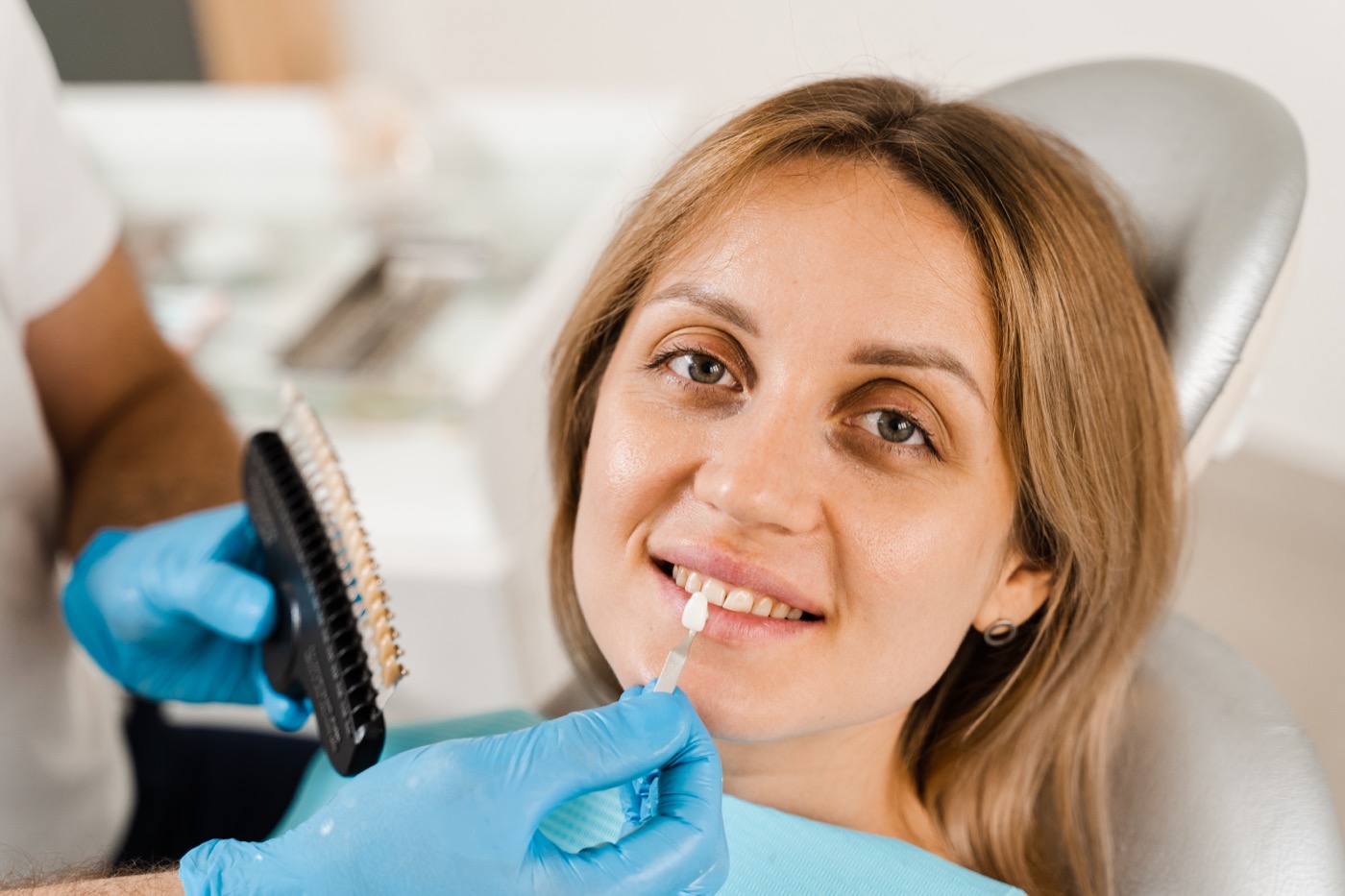
Teeth whitening lightens the natural colour of tooth tissue. It does not paint enamel white, it does not change shape, and it does not remove colour that sits in a filling, veneer or crown. The change shows on your own teeth. Restorations keep their shade until we replace them.
Myth: a stronger product from an advert means a whiter smile
The result depends on why the tooth is dark, not on the slogan on the box. Stains from coffee, tea, wine and smoking sit nearer the surface and usually lighten in a predictable way. Colour after tetracycline, after trauma, or in a dead tooth can sit deeper. Home trays may then change little or nothing, and we say that before you start, not after weeks of wear.
Charcoal pastes, oils and "whitening" with baking soda scrub stain or scratch enamel. They do not lighten dentine the way a clinic gel or a custom tray does. Abrasion is not whitening. On thin enamel it makes sensitivity worse and adds no whiteness.
Fact: healthy teeth first, colour second
Decay, a leaking filling and gum inflammation rule out a start. Whitening gel does not treat a cavity. It can irritate exposed dentine and gum if it lands where it should not. The visit therefore begins with an exam. We remove tartar first, because stain pretends to be a yellow tooth, and after a scale the colour is often lighter with no whitening at all.
Fillings in the smile have to be part of the plan. Composite does not lighten with the tooth. If the mismatch will show, we replace the filling after the shade has settled, not the day before treatment. The same applies to crowns and veneers: we match them to the teeth after whitening, not the other way round.
What to expect during treatment
With tray whitening you get trays made to your teeth and instructions on how much gel to use and how long to wear them. More gel does not speed the result. It leaks onto the gum and irritates it. Sensitivity to cold during the cycle is common and usually fades when you stop. If it is sharp, we pause or shorten the wear. We do not add an extra dose "just in case".
The colour when the trays come out is lighter than the colour that stays. In the first days the teeth lose some water and look chalky. We judge the final shade after it settles, before any restorations are replaced. Coffee, tea and wine stain faster in that window, so strongly coloured drinks are limited for a few days.
A single in-clinic session can be convenient when a date matters, but it is not magically longer lasting than tray whitening done properly. How long the result lasts still depends on diet, cleaning and whether the stain was on the surface. Nobody honest will guarantee "white forever".
When whitening is a poor idea
We step back when enamel is heavily worn, teeth are cracked, or sensitivity already makes cold water difficult. In pregnancy and while breastfeeding we do not start whitening without a clear reason, because colour can wait. A tooth that darkens from the inside after trauma is sometimes whitened from the root canal, not across the whole arch. That is a different procedure from smile whitening.
A very dark, uneven shade, or teeth with a poor shape, will not become a new smile from gel alone. The conversation then moves to veneers or a rebuild, and whitening is at most a first step so the new work does not have to be quite so opaque.
How not to pay for a promise
The useful questions are: which teeth will lighten, and which will stay darker because they are artificial? Do leaking fillings need replacing before we start? What do we do if sensitivity stops the cycle?
At Dental Park we talk about colour as part of dentistry, together with whether the tooth is healthy at all. If the dark tooth has already had a root canal, check that the canal is sealed first: we describe work under magnification in root canal treatment under a microscope. If the issue is a missing tooth rather than colour, implants are the closer subject.